12th EPRN Annual Economic Research Conference
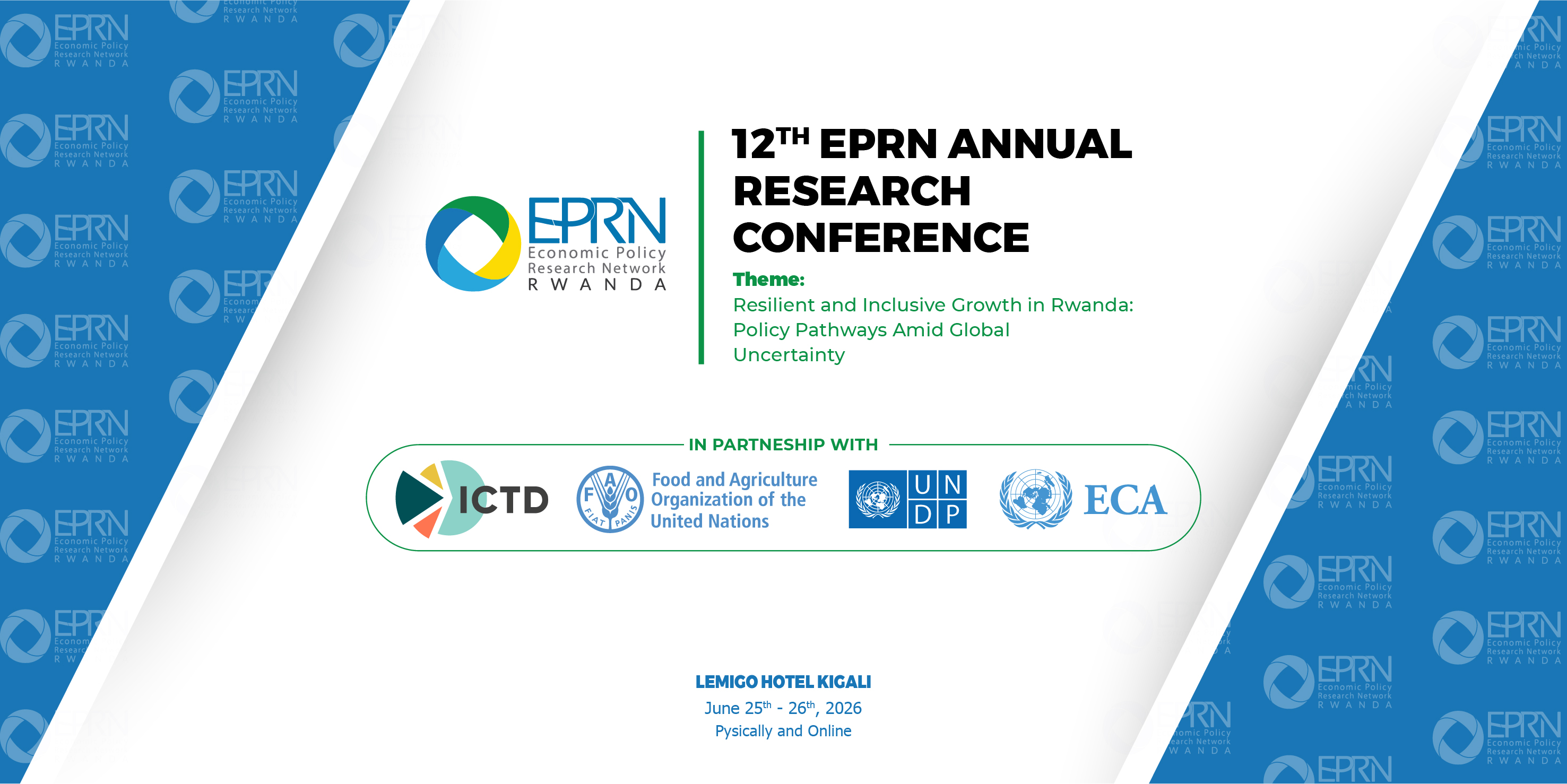
Conference Theme : Resilient and Inclusive Growth in Rwanda : Policy Pathways Amid Global Uncertainty
Venue : Lemigo Hotel Kigali, Dates : June 25th- 26th, 2026
1. Background and Rationale
Rwanda’s economy has shown remarkable resilience in recent years. Real GDP grew by 8.9% in 2024, exceeding earlier projections of 8.3%, driven by strong performance in services and industry (NISR, 2025). In the second quarter of 2025, GDP at current market prices was estimated at Frw 5,798 billion, up from Frw 4,966 billion in Q2 2024, representing a 7.8% year-on-year increase (NISR, 2025). Services contributed 50% of GDP, agriculture 23%, and industry 21%, while net taxes accounted for 5% (NISR, 2025).
Inflation, which peaked at 14.3% in 2023, has begun to ease, supported by tighter monetary policy and improved food crop production (IMF, 2024). Fiscal consolidation has also reduced Rwanda’s debt-to- GDP ratio from 71.3% in 2022 to 66.6% in 2023, reflecting improved domestic resource mobilization (MINECOFIN, 2024). The Government’s FY2025/26 budget stands at Frw 7,032.5 billion, a 21% increase from the previous year, prioritizing investments in agriculture, infrastructure, energy, and social services (MINECOFIN, 2025).
At the continental level, the CAADP Kampala Declaration (2025) sets ambitious targets for agrifood systems transformation, including tripling intra-African trade in agrifood products, reducing post- harvest losses, and raising the share of locally processed food (African Union, 2025). For Rwanda, where agriculture employs over 60% of the population and contributes nearly a quarter of GDP, aligning national agricultural policies with CAADP commitments is critical for food security, rural development, and export diversification (NISR, 2024).
Youth employment remains a pressing challenge. According to the EICV7 Youth Thematic Report (2025), Rwanda’s youth (aged 16–35) represent over 60% of the population, yet unemployment and underemployment rates remain high (NISR, 2025). The report highlights that while ICT and digital platforms are expanding, only 18% of youth are employed in technology-related sectors, underscoring the need for deliberate investments in skills development and digital job creation (NISR, 2025). Complementary findings from the ILO’s Digital Employment Diagnostic (2025) emphasize Rwanda’s potential to leverage ICT policies and innovation hubs to absorb its growing labor force (ILO, 2025).
Regional integration offers Rwanda significant opportunities. Exports to African countries increased from
$196 million in 2016 to $778 million in 2021, accounting for 50% of total exports (RDB, 2022). Full implementation of AfCFTA is projected to increase Rwanda’s real incomes by 3.2%, boost intra-African exports by 38%, and diversify export destinations (World Bank, 2024). However, challenges remain, including reliance on gold exports, limited industrial capacity, and non-tariff barriers (IMF, 2024).
Finally, Rwanda’s Vision 2050 emphasizes inclusive growth and equity, aiming to ensure that no citizen is left behind. Social protection programs, gender equality initiatives, and inclusive education policies are central to this agenda (Government of Rwanda, 2020). With poverty reduction progress slowing in recent years, renewed focus on equity is essential to sustain Rwanda’s transformation (World Bank, 2023).
Against this backdrop, the 12th EPRN Annual Economic Research Conference will provide a timely platform to discuss how Rwanda can strengthen fiscal space, advance agricultural transformation, harness youth potential, deepen regional integration, and promote inclusive growth. The conference will generate actionable recommendations to support Rwanda’s Vision 2050 and its role in Africa’s broader transformation.
Conference Objectives
The overall objective of the 12th EPRN Annual Economic Research Conference is to provide a platform for collaborative dialogue and evidence-based research that strengthens Rwanda’s economic resilience and inclusivity in line with Vision 2050 and the National Strategy for Transformation (NST2). The conference seeks to generate practical insights and policy recommendations that respond to both domestic priorities and global uncertainties, while fostering partnerships among government, academia, civil society, and development partners.
Specifically, the conference will brainstorm on key policy areas linked to its sub-themes : (a) evidence- based agriculture and food systems transformation for resilient growth, (b) tax administration to finance sustainable growth : strengthening Rwanda’s fiscal space and youth and (c) jobs in the era of technology – harnessing Rwanda’s demographic dividend. These objectives aim to guide discussions toward actionable strategies that can accelerate Rwanda’s journey toward sustainable and equitable development.
3. Conference Sessions and Focus Areas
Day 1 -25/06/2026 EPRN/FAO Session
SESSION 1 : EVIDENCE-BASED AGRICULTURE AND FOOD SYSTEMS TRANSFORMATION FOR RESILIENT GROWTH
09h30-12h30
Context : Agriculture remains the backbone of Rwanda’s economy, employing over 60% of the population and contributing nearly a quarter of GDP. Beyond its role in livelihoods, agriculture is central to food security, nutrition, rural development, and export diversification. It also plays a critical role for the environment, as it both relies on land but can also be a source of environmental services. To accelerate transformation through leveraging global and continental commitments such as the CAADP Kampala Declaration (2025), Rwanda needs to rely on advanced tools to optimize policies, monitor the functioning of like the FAO’s Policy Optimization Tool (PolOpT)
and also traceability and monitoring platforms such as the FAO’s Monitoring and Analyzing Food and Agricultural Policies (MAFAP) programme as well as collaborative efforts to monitor global food systems such as the Food Systems Countdown Initiative
(FSCI) together can provide Rwanda with robust mechanisms to design, evaluate, and implement agricultural policies that strengthen resilience, inclusivity, and sustainability in the face of climate change, demographic pressures, and regional integration challenges.
Focus Areas :
- Food systems resilience : Monitor FAO’s MAFAP programme and FSCI indicators to explore strategies for enhancing food security, nutrition, and sustainability, including climate-smart agriculture, irrigation, and mechanization.
- Policy coherence and monitoring : Use M FAO’s MAFAP programme and PolOpT to track and evaluate Rwanda’s agricultural and food policies, ensuring consistency with Vision 2050 and CAADP targets as well as equity and inclusion.
- Value chain development : Brainstorm on strengthening agribusiness, agro-processing, and market linkages to reduce post-harvest losses and increase competitiveness for export commodities.
- Financing and innovation : Deliberate on innovative financing instruments, digital platforms, and public-private partnerships to support farmers and SMEs, guided by evidence-based policy modelling.
SESSION 2 : TAX ADMINISTRATION TO FINANCE SUSTAINABLE GROWTH : STRENGTHENING RWANDA’S FISCAL SPACE
14h00-16h00
Rwanda has made notable progress in stabilizing its fiscal position, with the debt-to-GDP ratio declining from 71.3% in 2022 to 66.6% in 2023 (MINECOFIN, 2024). This improvement reflects prudent fiscal management and stronger macroeconomic fundamentals. However, the country’s long-term development ambitions under Vision 2050—such as infrastructure expansion, human capital development, and climate resilience—require a more robust and sustainable domestic resource mobilization framework. Strengthening tax administration and diversifying financing instruments will be critical to bridging the gap between fiscal needs and available resources.
At the same time, Rwanda must balance the imperative of raising revenues with the need to maintain private sector competitiveness and protect citizen welfare. Over-taxation or poorly designed incentives could undermine investment and innovation, while weak compliance systems risk eroding trust in fiscal institutions. Therefore, aligning reforms with RRA and MINECOFIN strategies, while drawing on ICTD’s global expertise in tax and development, offers a pathway to build a fair, efficient, and future-ready fiscal system that supports inclusive growth.
- Tax Administration Reforms : Enhance efficiency, compliance, and equity through digital platforms, risk-based audits, and broadening the tax base.
- Innovative Financing Instruments : Explore green bonds, blended finance, diaspora bonds, and digital tax systems to diversify revenue streams.
- Balancing Revenue and Welfare : Safeguard SMEs, ensure progressive taxation, and align fiscal measures with private sector competitiveness and citizen welfare.
Day 2 -26/06/2026 EPRN/ UNECA/MINICOM
SESSION 3 : EAC REGIONAL ECONOMIC STATUS AMIDIST GLOBAL SHOCKS
09h00-10h30
Context : The East African Community (EAC) has achieved notable progress in regional integration, trade expansion, and infrastructure development. However, global shocks—including rising energy prices, disruptions in critical maritime routes, and volatility in commodity markets—continue to challenge macroeconomic stability and inclusive growth. These external pressures have translated into inflationary spikes, higher transport costs, and fiscal imbalances across member states.
For Rwanda and its EAC partners, resilience requires coordinated regional responses, diversification of energy sources, and stronger trade facilitation mechanisms. UNECA’s regional outlook emphasizes that while external shocks expose structural vulnerabilities, they also present opportunities to deepen intra EAC trade, accelerate renewable energy investments, and strengthen fiscal and monetary coordination.
This session will feature a keynote presentation by UNECA on the EAC’s economic outlook, followed by a panel discussion with MINICOM, MINECOFIN, TradeMark East Africa (TMEA), and private sector representatives. The dialogue will explore how the region can mitigate external shocks while advancing inclusive and sustainable growth.
Focus Areas :
- Fuel Price Shocks : Assess the impact of global energy disruptions on fuel imports, transport costs, and inflation, while exploring strategies for energy diversification and regional fuel reserves.
- Supply Chain Disruptions : Examine vulnerabilities in global and regional supply chains, and deliberate on logistics reforms, trade facilitation, and digital platforms to strengthen resilience.
- Regional Trade Integration : Discuss how deeper EAC integration, harmonized standards, and AfCFTA linkages can cushion economies against external shocks.
- Fiscal and Monetary Coordination : Explore coordinated fiscal policies, regional stabilization funds, and monetary frameworks to manage inflation and external imbalances.
- Private Sector Adaptation : Showcase how businesses are innovating to cope with rising costs, including investment in renewable energy, local sourcing, and digital trade solutions.
- Inclusive Growth Strategies : Ensure that policy responses protect vulnerable groups, promote gender equality, and create opportunities for youth in regional value chains.
SESSION 4 : BUILDING FUTURE-READY YOUTH EMPLOYMENT ECOSYSTEMS IN RWANDA – FROM EVIDENCE TO ACTION
11h00-12h30
Context : Rwanda’s youth population represents a powerful demographic dividend, yet unemployment and underemployment remain persistent challenges. With rapid technological change, shifting labor market demands, and global economic shocks, traditional employment pathways are no longer sufficient. Building a future-ready youth employment ecosystem requires evidence-based strategies that integrate education, skills
development, entrepreneurship, and policy innovation.
This session will highlight how Rwanda can move from diagnosis to action, leveraging data-driven insights to design inclusive employment systems. It will emphasize the role of government, private sector, and development partners in co-creating pathways that prepare youth for jobs of the future—whether in ICT, green economy, creative industries, or advanced manufacturing. By aligning education with labor market needs, strengthening entrepreneurship ecosystems, and embedding resilience into policy frameworks, Rwanda can ensure its youth are equipped to thrive in a rapidly evolving economy.
Focus Areas :
- Evidence-Based Insights : Use labor market data, tracer studies, and evaluation frameworks to identify gaps between youth skills and employer needs.
- Skills for the Future : Explore digital literacy, coding, green skills, and soft skills as critical competencies for future-ready employment.
- Entrepreneurship Ecosystems : Deliberate on incubation hubs, access to finance, and mentorship programs to support youth-led enterprises.
- Policy Innovation : Discuss reforms to education, labor, and investment policies that foster inclusive and sustainable job creation.
- Partnerships and Collaboration : Highlight the role of government, private sector, and development partners in co-designing employment ecosystems.
Expected Conference Outcomes
The 12th Annual Economic Research Conference is expected to generate both policy-relevant outputs and capacity-building impacts that contribute to Rwanda’s Vision 2050 and NST2 priorities.
- Evidence-based policy recommendations : Actionable insights on tax administration, agriculture, youth employment, regional integration, and inclusive growth to inform government strategies.
- Strengthened collaboration : Enhanced partnerships between policymakers, researchers, academia, civil society, and development partners for coordinated policy implementation.
- Knowledge dissemination : Publication of conference proceedings, policy briefs, and selected research papers to guide future programming and advocacy.
- Capacity building : Opportunities for young researchers and practitioners to present, network, and gain mentorship from senior experts.
- Visibility of Rwanda’s policy innovations : Showcasing Rwanda’s progress in fiscal reforms, agricultural transformation, ICT-driven youth employment, and regional integration within continental and global platforms.
- Networking and partnerships : New collaborations across sectors to support inclusive and sustainable development initiatives.
4. Participants
The 12th EPRN Annual Economic Research Conference is expected to attract approximately 350 participants from Rwanda and abroad, attending both physically at Lemigo Hotel and virtually through online platforms. This diverse mix of stakeholders will ensure rich dialogue, knowledge exchange, and practical recommendations.
Categories of Participants
- Government Institutions : Senior officials and technical staff from ministries and agencies such as MINECOFIN, MINAGRI, MINICT, MINICOM, NISR, RRA, and the Central Bank of Rwanda.
- Development Partners : Representatives from multilateral and bilateral organizations including the ICTD, IFPRI, MasterCard foundation, World Bank, IMF, Akademiya2063, UNDP, UNICEF, FAO, and key donor agencies.
- Academia and Research Institutions : Professors, researchers, and students from the University of Rwanda, regional universities, and think tanks engaged in economic policy and social sciences.
- Private Sector : Business leaders, SMEs, financial institutions, and industry associations contributing to Rwanda’s economic transformation.
- Civil Society and NGOs : Organizations working in child protection, gender equality, agriculture, and inclusive development.
- Regional and International Experts : Specialists in fiscal policy, agriculture, youth employment, trade, and inclusive growth from across Africa and beyond.
- Youth and Early-Career Researchers : Emerging scholars, innovators, and entrepreneurs presenting research papers, participating in workshops, and networking with senior experts.
- Media Representatives : Journalists and communication professionals covering economic policy, development, and regional integration.
Agenda

Concept note
Recent post
-

-

-
-

6th Annual General Assembly
Oct 4, 2022 -
-
-
PRESS RELEASE
Jun 10, 2022 -
-
-