Profile
2nd Public Policy Dialogue on Investing in Children and Youth- in Rwanda
Organized jointly by EPRN, UNICEF, Save the Children, GIZ,CVT and CLADHO
1. Introduction
Article 4 of the Convention on the Rights of the Child obligates state governments to invest appropriate resources to safeguard the child rights “to the maximum extent of their available resources”. Safeguarding these rights requires states to engage in budgeting processes that allocate necessary resources to provide access to social services for all children, so they can reach their full potential.
In June 2016, the UN Committee on the Rights of the Child made general comment No. 19 on public budgeting for the realisation of children’s rights, which provides states with detailed guidance on their obligation to invest in children. The UN Committee recommends open, inclusive and accountable resource mobilisation, budget allocation and spending. It asserts that states must not discriminate against any child during resource mobilisation, budgeting and spending processes. The committee underlined that states are obliged to take measures within their budget processes to generate revenue and manage expenditures to sufficiently realise the rights of the child and suggested that governments adhere to principles of effectiveness, efficiency, equity, transparency and sustainability as tools of resource mobilisation.
Rwanda is entering a new phase of development which will be propelled by Vision 2050 ambitions, primarily transforming Rwanda into an upper middle-income country by 2035 and a high-income country by 2050. The government’s development agenda, the National Strategy for Transformation (NST), is currently being implemented to support Rwanda’s transition from Vision 2020 to Vision 2050.
In collaboration with the World bank, the Government of Rwanda recently completed an analysis on future drivers of growth. These findings emphasize the need for a stronger focus on human capital development and innovation as catalysts for development in the long term.
In this regard, the Government of Rwanda’s investments are more channeled towards strengthening human capital development under the social transformation pillar of the NST. This is reflected in national plans and budgets for FY2019/20, whereby the government is investing significantly in human capital development interventions such as education, health, social protection and employment.
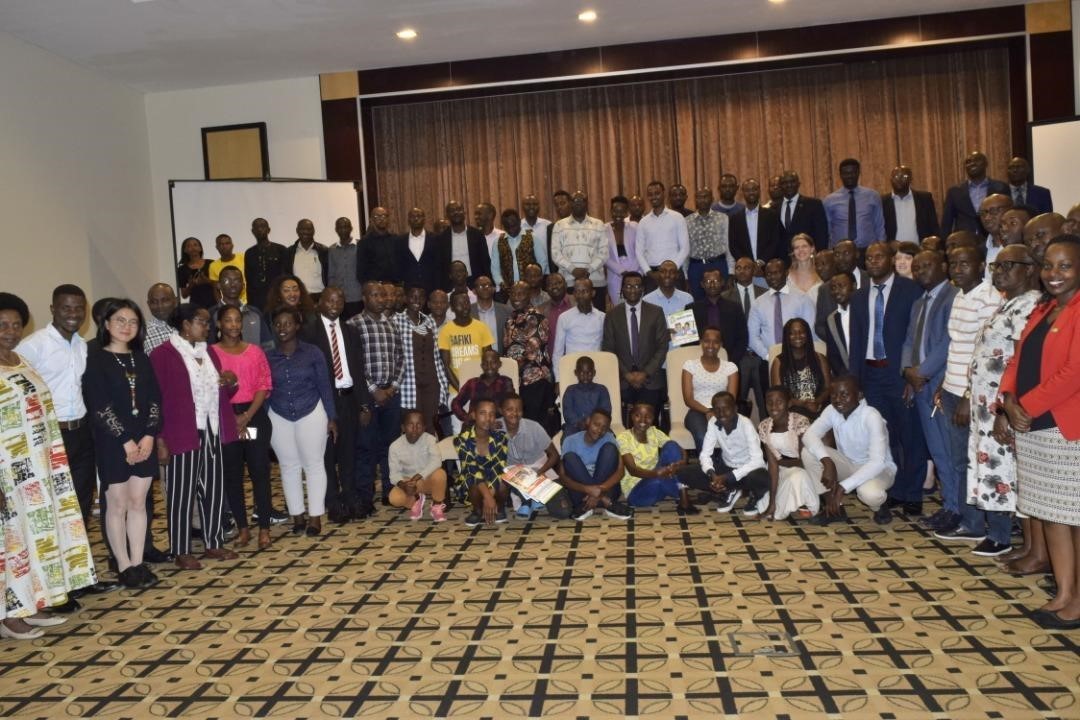
In December 2019, over 130 participants from the Government of Rwanda, non-governmental organizations (civil society and faith-based organizations), development partners, the Private Sector Federation, and academia gathered to reflect on Rwanda’s development journey during an open policy dialogue. Participants discussed required investments for children and youth as key beneficiaries in human capital and innovation strengthening, examining all stages of planning, budgeting and execution. The policy dialogue was also a relevant forum for assessing efficient and effective use of public financing through robust monitoring, evaluation, and analysis of existing policies, strategies, and plans in Rwanda’s transformation agenda.
2. Objective
This public policy dialogue aimed to enable stakeholders from the Government of Rwanda, development partners, non-governmental organisations, faith-based organisations, the private sector, and academia to reflect on investment needs for children and youth in Rwanda toward the achievement of highly productive human capital, and for transforming Rwanda into an innovation hub through citizen participation.
Specifically, the policy dialogue was an opportunity to :
- Showcase the recent analytical work (budget briefs) conducted around public financing for children and young people ;
- Present the citizen guide to the 2019/2020 national budget, therefore collecting feedback on government efforts to strengthen human capital ; and
- Share success stories and feedback around the participatory approach adopted by national and decentralised entities during planning and budgeting processes, particularly among children and young people.
3. Achieved results
Following the dialogue, the following results were noted :
- Increased understanding of the scale and level of investment required for children and youth in Rwanda (public financing for children) ;
- Increased awareness of investment trends for children and young people, and the areas that require further improvement ;
- Increased understanding of existing tools to enable feedback mechanisms on child and youth development priorities using the citizen’s guide to the national budget, and ;
- Proposed recommendations on strengthening transformative and participatory planning and budgeting in Rwanda, as well as establishing effective feedback mechanisms for increased transparency.
4. Policy dialogue presentations briefs
a. Opening remarks
Representatives from the Economic Policy Research Network (EPRN), children’s committees, and UNICEF gave opening remarks. Seth Kwizera, EPRN Coordinator, emphasized the need for more public discussion on investing in children for human capital development. Among other priorities, this should emphasize strengthening literacy and addressing multiple deprivation issues facing children and young people if Rwanda is to become a knowledge-based economy. Elodie, national representative of the children’s committees, commended investments made by the Government of Rwanda for child development. However, she called for increased child participation in decision making. Charlotte Taylor, UNICEF Chief of Social Policy and Research, noted that this policy dialogue is a continuation of celebrating 30 years of the Convention on the Rights of the Child. She commended the continued increase in public investments towards priority sectors for children but highlighted the challenges that children and young people still face and need to be re-prioritised in public planning and budgeting discourse. These challenges include quality of services, high student-teacher-ratios, water quality, high stunting rates among children under five, and high rates of multidimensional child poverty.
b. Presentation on budget briefs 2019/20
UNICEF recently completed analyses of the 2019/20 social sector budgets (health, education, social protection and WASH), as well as the 2019/20 national. These budget briefs, available on the UNICEF Rwanda website, analyse the size and composition of budget allocations for the 2019/20 fiscal year, synthesize complex budget information, and offer recommendations to strengthen budgeting for children. During the public policy dialogue, UNICEF Social Policy Specialist Emmanuel Munyemana highlighted the following budget patterns :
- Rwanda continues to make significant progress in socio-economic and inclusive development, which is essential for improving the well-being of children and young people. The national budget is overall increasing in nominal and real terms.
- The education sector recorded a nominal budget increase from RWF 220 billion in 2016/17 to RWF 310 billion in 2019/20. However, the education budget as a share of the national budget slightly dropped from 11 per cent in 2018/19 to 10.8 per cent in 2019/20. The education budget is disproportionately allocated by education levels, with tertiary education taking the larger share when compared to the student population
- The health sector also enjoyed nominal budget increases over recent years. However, as a share of the national budget the health budget decreased from 9.5 per cent in 2018/19 to 8 per cent in 2019/20. Analysis shows that the health sector relies heavily on external funds which makes the sector vulnerable to external shocks and less sustainable. The Government of Rwanda should therefore focus on sector financing sustainability by increasing the share of the domestic budget allocated to the sector.
- The Government of Rwanda has steadily increased the budget allocated to social protection in recent years from RWF 79.4 billion in 16/17 to RWF 187.1 billion in 2019/20. However, coverage of social protection is not enough to cover all eligible households.
- Budget allocation for the WASH sector increased in nominal terms and as a share of the national budget from RWF 29.5 billion in 2016/17 to RWF 65.9 billion in 2019/20. However, focus has been on urban sanitation while WASH budget allocated to rural areas has decreased in recent years.
c. Results of participatory planning for FY 2020/2021 at decentralized levels
The Government of Rwanda has recently increased the level of participatory planning and budgeting, with special focus on local levels. Justine Gatsinzi, Head of Social Protection at the Local Administrative Entities Development Agency (LODA), emphasized the role of citizens in selecting local development priorities which also serve as the basis for district performance contracts. His presentation specifically elucidated citizen’s engagement during planning, whereby the Government has started engaging citizens at grassroots levels by outlining priorities around the three main pillars of the NST.
d. Presentation of the citizen guide to the national budget
The Government of Rwanda has recently committed to increase the amount of budget-related information made available to the public, contributing to stronger public sector accountability and transparency. The citizen guide to the national budget was therefore produced and disseminated in communities and schools. The Director General of the National Budget from MINECOFIN, Rehemah Namutebi, briefed participants on the citizen guide and encouraged stakeholders to read it and the national budget to get acquainted with government plans and to provide feedback.
e. Children’s panel discussion
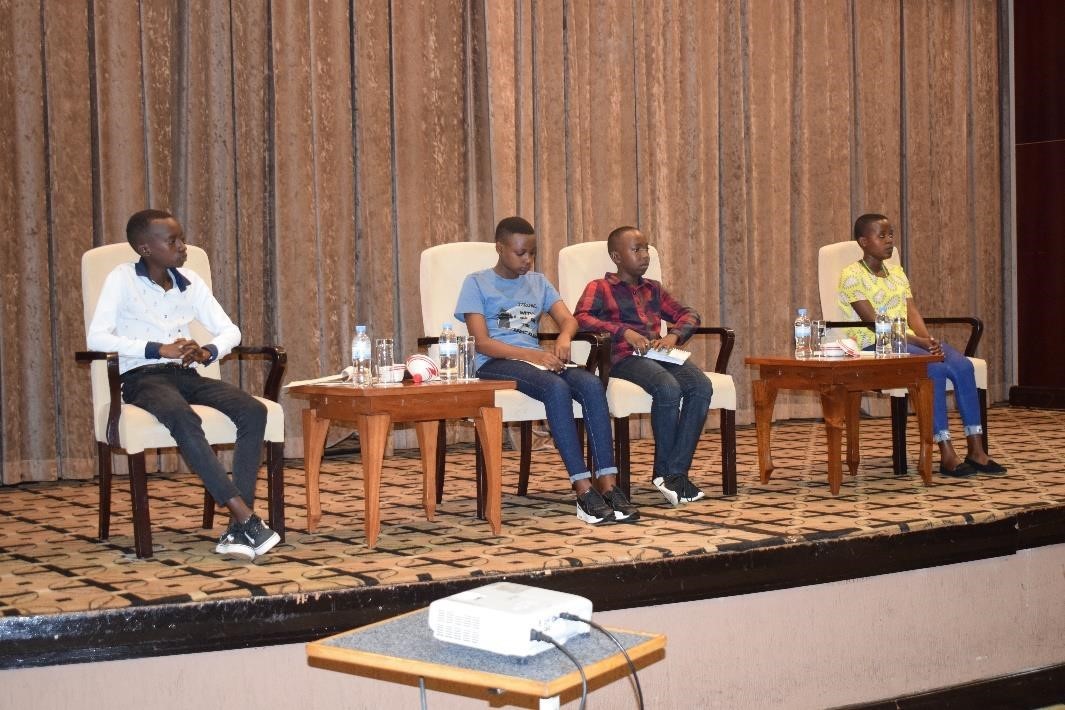
To strengthen children’s involvement in the policy dialogue, a child panel was held with participants from Kirehe, Gasabo, Nyanza and Nyarugenge Districts. During the panel, children gave opinions on national budgeting and how their participation in national planning and budgeting is still led by civil society while local government is still passive. They asked for more space for their participation and pointed out that adults and parents should promote a culture of self-expression and self-confidence among children. The children also put forth the following challenges which should be prioritised during government planning and budgeting processes :
- There are still cases of gender-based violence and a lack of viable mechanism to support child victims of gender-based violence.
- Children in rural areas often travel long distances to reach school, which affects their quality of learning and education outcomes.
- In urban areas, there is still an issue of child labour.
- There is insufficient support for children with special needs, especially those with disabilities, and incoherent strategies and programmes to support children with disabilities to access education.
- Schools lack girls’ rooms to support young and adolescent girls during their menstrual cycles, resulting in school absenteeism and drop out.
- Some schools lack access to clean water, which affects children’s health conditions, especially resulting in frequent diseases related to poor hygiene.
- Schools do not provide cost-free meals, which especially affects children from low income households.
Children were encouraged to continue speaking out on issues that affect them, and local administration was encouraged to consider children’s and young people’s views during planning and budgeting.
f. Role of civil society in national planning and budgeting
Marcel Sibomana from Save the Children noted that civil society plays a significant role in planning and budgeting, especially in the following areas : (i) building capacities of communities to meaningfully participate in planning and budgeting at local levels ; (ii) supporting communities to participate in planning and budgeting ; (iii) contributing to resource mobilisation ; (iv) performing budget analysis to support feedback mechanisms ; and (v) advocating with decision makers on issues affecting the population.
5. Discussion, questions and answers
The following key points arose from discussion, question and answer sessions during the policy dialogue : How participatory planning and budgeting involve children and youth : Participatory planning is conducted in schools and in other forms which convene children and young people. Disseminating the citizen budget guide in schools is also helpful to ensure students are aware of the national budget. Children and young people are also encouraged to voice their needs during planning, and the community is also encouraged to consider the views of children and young people.
How children with disabilities are considered during planning and budgeting : Planning and budgeting guidelines promote inclusiveness and equity. Local government institutions are required to ensure that children with disabilities are part of community consultations and that their voices are heard.
What is being done to prepare youth for employment and strengthen career guidance in lower education : The Government of Rwanda has established career advisory centres in higher learning institutions and the Ministry of Education is implementing a similar programme in secondary schools to ensure that career discussion start early. However, it is also recognised that more efforts are needed to increase the quality of career advisory services and employment readiness among Rwandan youth.
6. Recommendations
Public investments for priority sectors for children
Education
- Further prioritise allocation in the pre-primary and primary education sectors to ensure a stronger learning foundation.
- Increase resources for teacher training and professional development to enhance the quality of education.
Health
- Increase domestic resources for health to strengthen sector capacity to scale up provision of quality health services and to ensure sector financial sustainability.
- Increase allocations for infectious disease prevention to maintain health sector gains.
Social protection
- Scale up coverage of social protection interventions, which will require in the medium term an increased budget for social protection to meet the ambition to graduate people from extreme poverty.
- Design a sustainable long-term social protection financing strategy to ensure budget adequacy.
WASH
- Rebalance (from urban dominant to rural dominant) the WASH sector budget to improve WASH outcomes in rural areas.
- Develop and strengthen WASH sector financing mechanisms (blended finance, revolving funds, guarantees etc.) to enhance efficiency and effectiveness.
Overall, there is a need to increase the budget absorption, leading to increased budget execution rates among the priority sectors for children.
Participatory planning for FY 2020/2021 and Citizens Guide of the national budget
- Strengthen the role of local government in promoting participatory planning and budgeting among children and young people.
- Expand the coverage of the citizen guide to the national budget and conduct user satisfaction surveys on how the guide should be improved.
- Strengthen planning and budgeting on issues affecting children and youth across different sectors (education and school access, family and gender-based violence, hygiene and water, school feeding).
PRESENTATIONS
NATIONAL POLICY DIALOGUE ON PUBLIC INVESTMENT IN CHILDREN
Presented by : Evariste MURWANASHYAKA PM & CRFP

Public Investing for Children and Youth in Rwanda
By : UNICEF
Citizen Guide to the Budget in Rwanda